Quick summary: Work based learning connects what students learn in a career and technical education class to real workplaces. Federal law defines it as sustained interactions with industry professionals in real workplace settings, or simulated environments at school, aligned to curriculum. It ranges from guest speakers and site visits to internships and apprenticeships. Done well, it gives students experience and employer connections before they graduate.
What is work based learning?
Work based learning is hands-on time with employers, in real workplaces or simulated ones, tied to what students learn in class. It’s the part of career and technical education (CTE) that doesn’t stay in the classroom. Students see the work, try the work, and meet the people who do the work.
Perkins V, the federal law that funds CTE, gives it a specific definition. As quoted by the Education Commission of the States, work based learning means:
“sustained interactions with industry or community professionals in real workplace settings, to the extent practicable, or simulated environments at an educational institution that foster in depth, firsthand engagement with the tasks required in a given career field, that are aligned to curriculum and instruction.”
Three words in that definition do the heavy lifting: sustained, firsthand, and aligned. A one-time assembly speaker doesn’t meet that bar on its own. A series of experiences tied to what students are learning does.
Why work based learning matters to districts
Perkins V lets states measure CTE program quality in a few ways. One option is the percentage of CTE concentrators who graduate having taken part in work based learning. If your state chose that measure, work based learning shows up directly in how your programs are evaluated.
It’s also what turns high school career pathways into real connections with employers.
There’s a simpler reason too. A student who’s seen the job knows what they’re signing up for. An employer who’s met your students has a reason to hire them.
Work based learning activities, from first look to first job
These work based learning examples work best as a sequence that gets deeper as students move through a program of study. A common progression looks like this:
| Stage | What students do | Examples |
|---|---|---|
| Awareness | Learn what careers exist | Guest speakers, career fairs, virtual tours |
| Exploration | See the work up close | Site visits, job shadows, informational interviews |
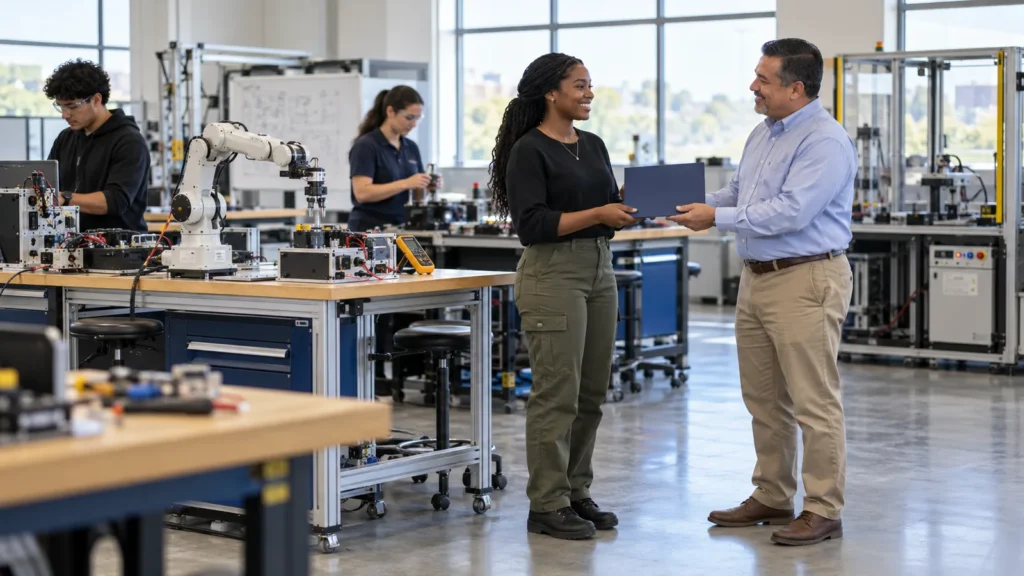
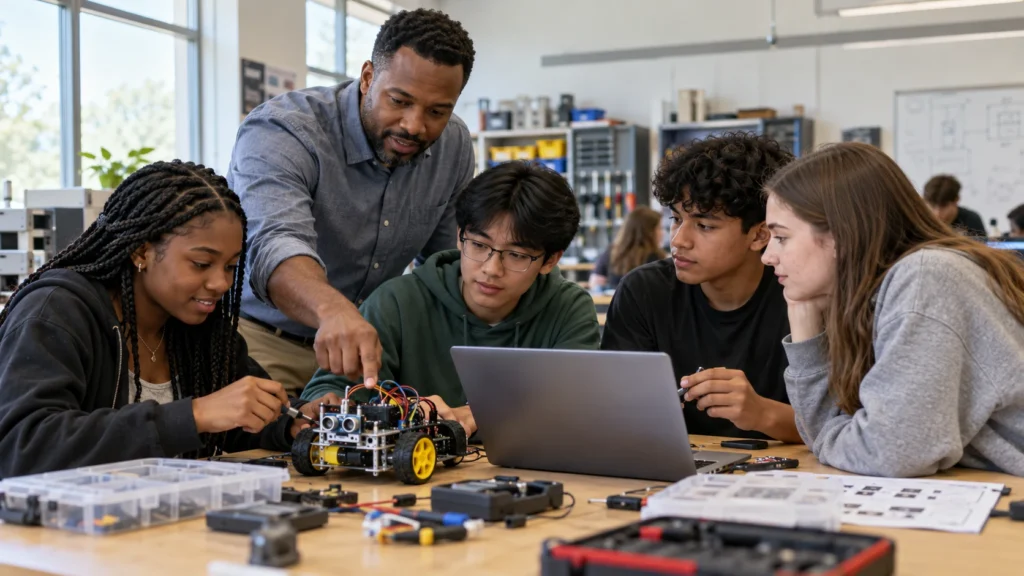
| Preparation | Do the work with guidance | Projects with employer input, school-based labs, mentoring |
| Training | Do the work for real | Internships for high school students, pre-apprenticeships, apprenticeships |
The first stage is the easiest to set up. The later stages are harder because they depend on employer relationships and staff time.
How to build employer connections for work based learning
- Start with the employers you already know. Advisory committee members, local manufacturers, and parents who work in the field are the easiest first asks.
- Make the ask small and specific. One site visit’s an easier yes than a semester-long internship program.
- Tie every activity to the curriculum. That’s what makes it count under the Perkins V definition. It also connects work based learning to your CTE programs of study.
- Track participation. If your state measures work based learning, you’ll need the records anyway, so don’t wait.
- Use simulated environments when workplaces aren’t practical. The federal definition allows them, which matters for students who can’t travel to a job site.
How Illuminate STEM supports work based learning
Illuminate STEM partners with school districts to deliver technology career programs in robotics, automation, and advanced manufacturing. Our programs include hands-on lab work and direct connections to employers, so students see how their skills get used on the job.
See our programs or learn more about Illuminate STEM.
Frequently asked questions
What counts as work based learning under Perkins V?
It’s sustained time with industry or community professionals, in real workplaces or simulated ones at school. It has to give students firsthand engagement with a career’s tasks and line up with the curriculum.
Is a job shadow considered work based learning?
A job shadow is a common exploration activity. To meet the Perkins V definition, it works best as part of a sustained series of experiences tied to what students are learning.
Can work based learning happen at school?
Yes. The Perkins V definition includes simulated environments at an educational institution when real workplace settings aren’t practical.
Bring employers into your CTE programs
If your district wants deeper work based learning in technology careers, start with one program and one employer. Connect with Illuminate STEM or email info@illuminatestem.org to talk about your programs.